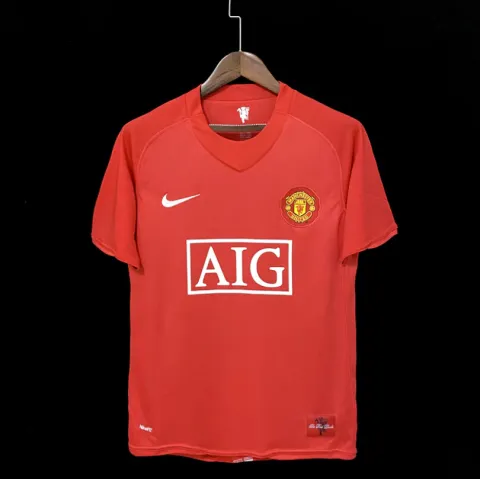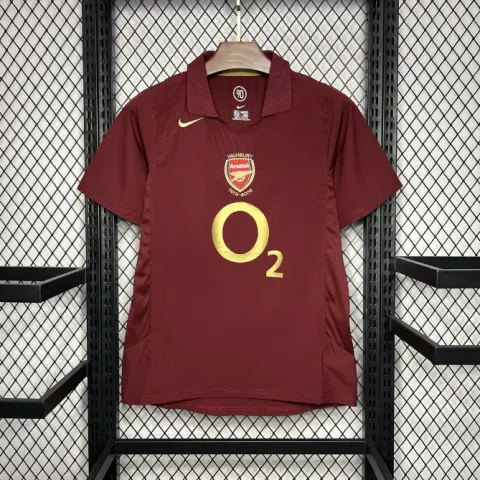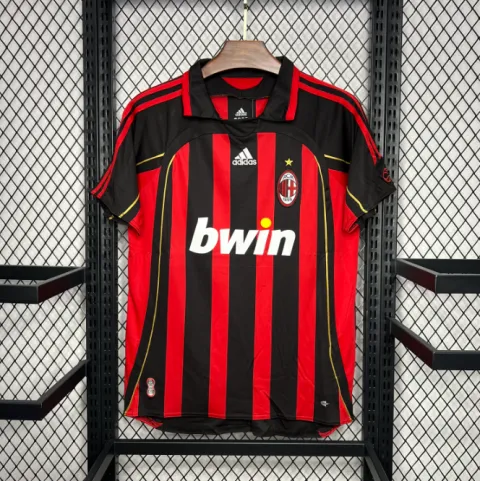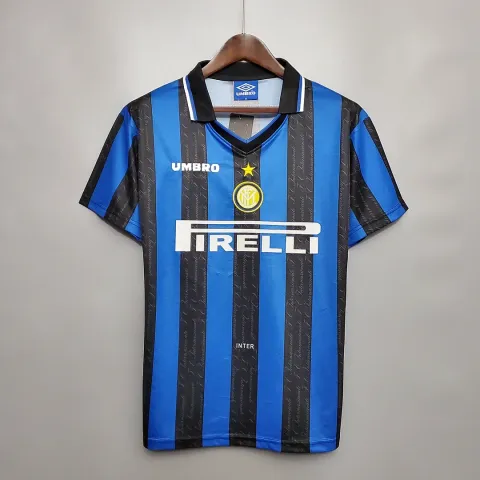
Put a 1999 Manchester United shirt next to this season's kit and they barely look like the same garment. The retro one is baggy, heavy, has a proper collar and a crest you can feel with your thumb. The new one is slim, light, full of tiny holes and printed so flat you could miss it. Here's what changed, why it changed, and why so many people are going back to the old stuff.
The fit: from tents to second skins
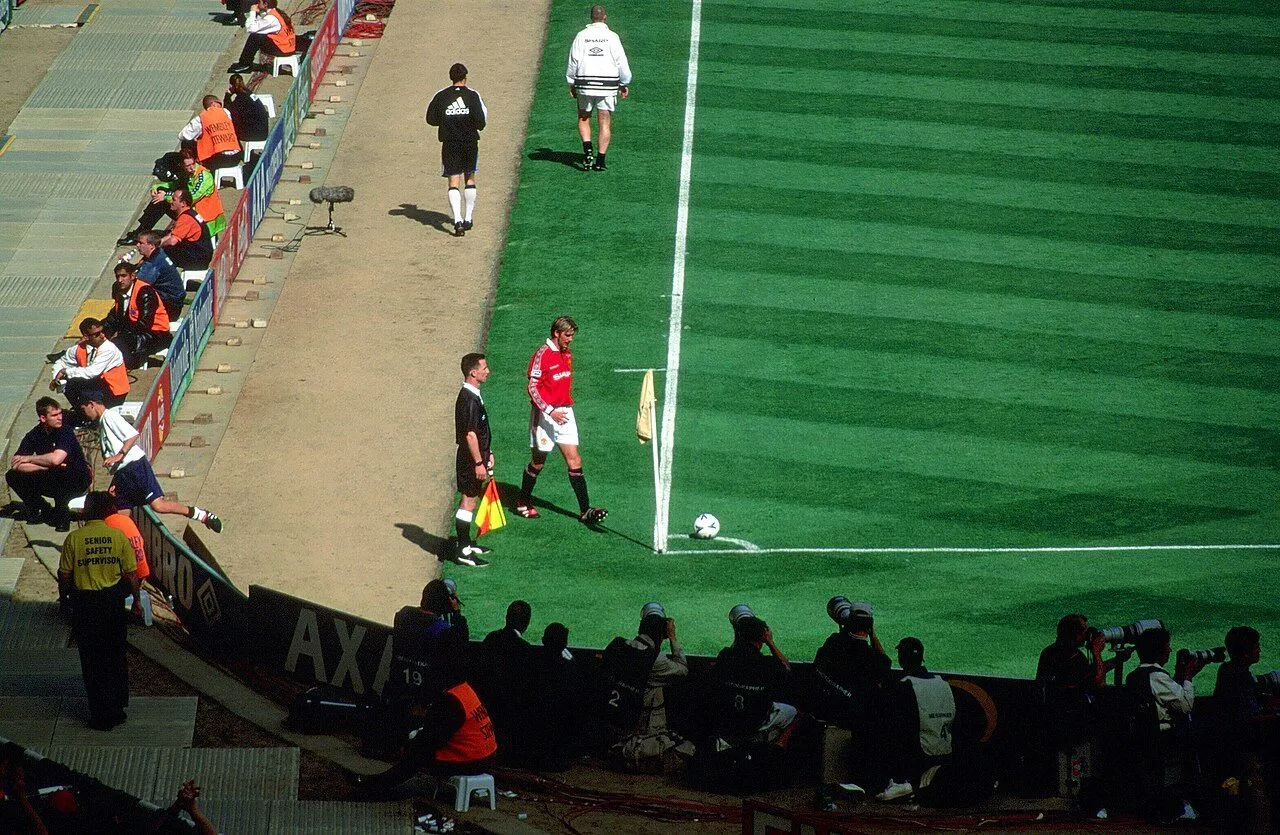
The biggest difference is the first thing you notice when you put one on. Shirts from the early and mid-1990s were cut big and boxy: dropped shoulders, wide bodies and sleeves that ended somewhere near the elbow. Players wore them tucked into shorts that were getting longer by the year. Look at Beckham at Wembley in the photo above: the 1999 Umbro shirt hangs off him even though he was one of the leanest players on the pitch.
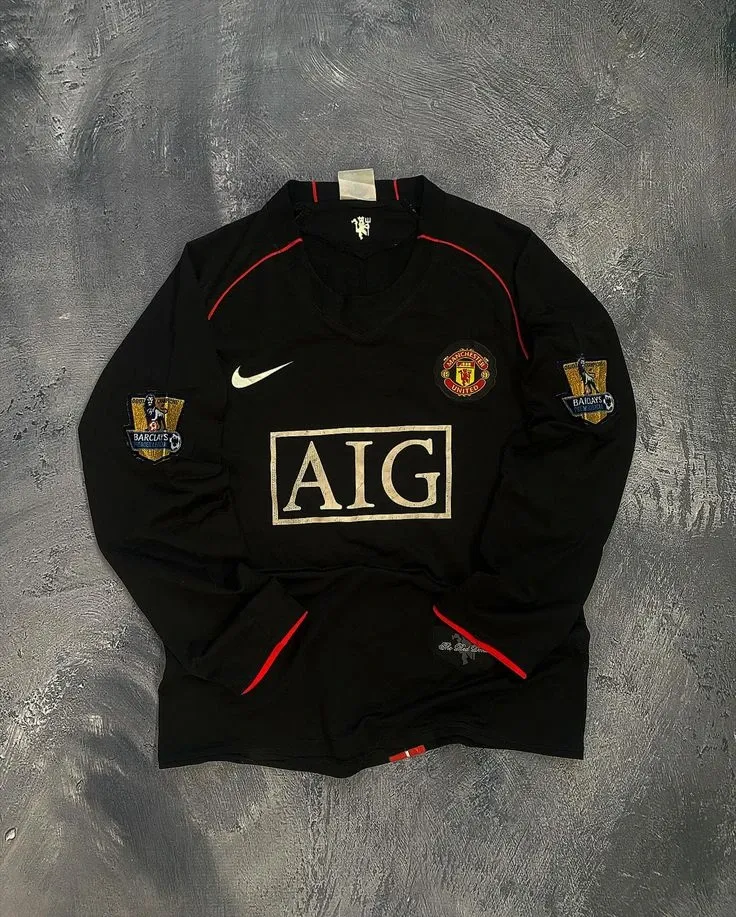
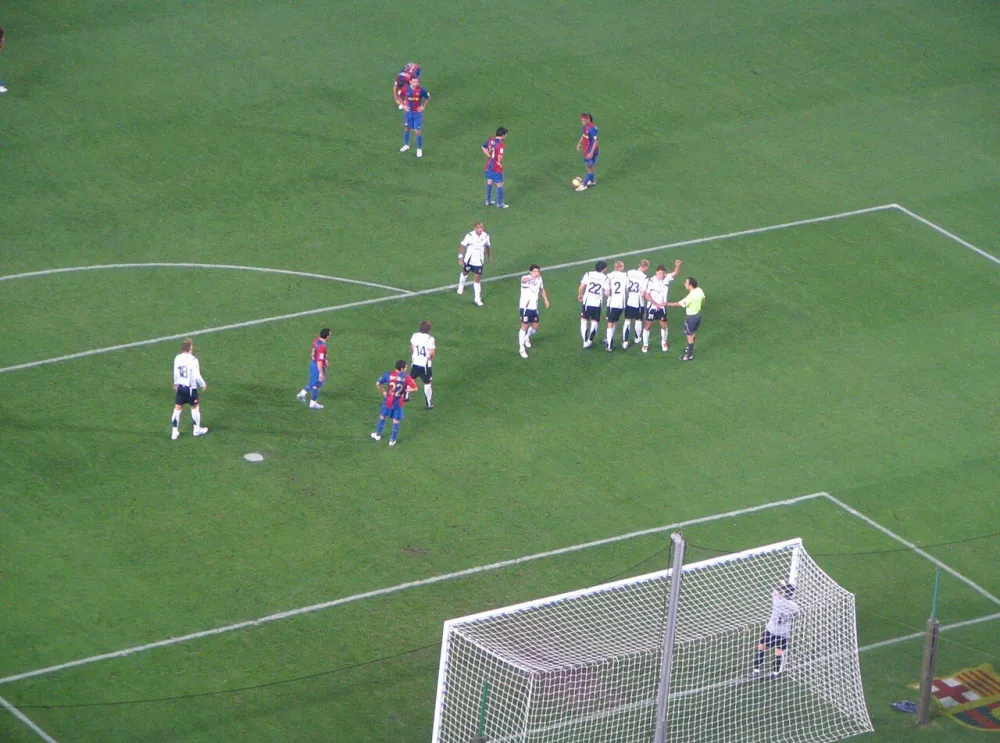
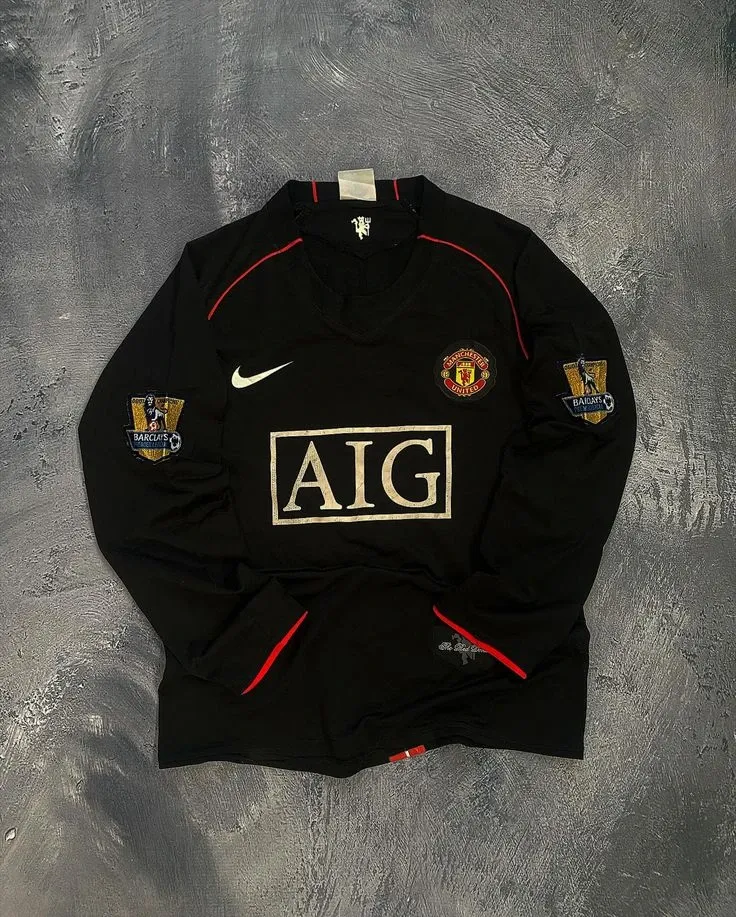
By the mid-2000s the cut had tightened up. Kits like Manchester United's 2007/08 shirts and Barcelona's Ronaldinho-era Nike kits sit closer to the body but still have room in them. Today's shirts, especially the player versions, are slim and athletic. They are designed to stretch, stay close to the skin and give a defender nothing to grab.
If you love the relaxed look of a 90s shirt, our retro jerseys give you that easy fit without being a tent. If you're between sizes on a modern kit, go up one. Every jersey has its own size chart on the product page.
Fabric: heavy polyester vs engineered mesh
Retro shirts were mostly thicker polyester, often with a shiny finish and a woven "shadow" pattern built into the fabric: faint stripes, club crests or geometric shapes you only see when the light hits them. They were tough, but they soaked up sweat and got heavy by the second half.
From around 2010 the big brands moved to lightweight recycled polyester with sweat-wicking finishes. Modern player shirts go further with zoned ventilation: small perforations or a textured knit across the back and sides where players heat up most. The result is a shirt that weighs a fraction of the old ones and dries fast. The trade-off is that thinner fabric needs a bit more care in the wash (see our jersey care guide).
Crests, collars and sponsors
Crests
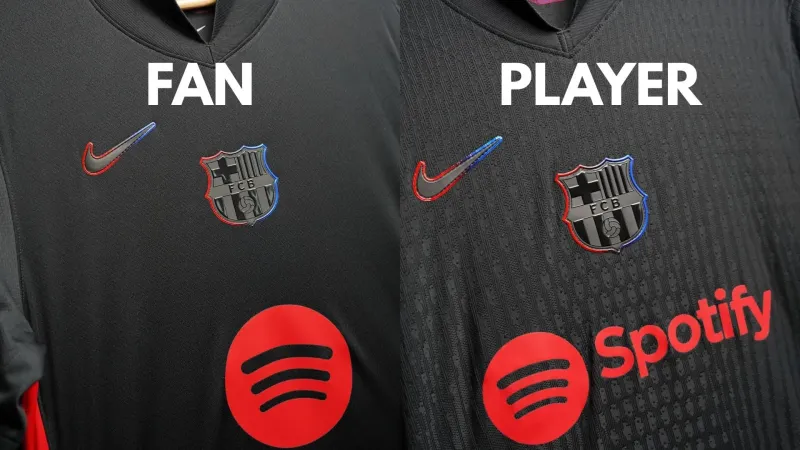
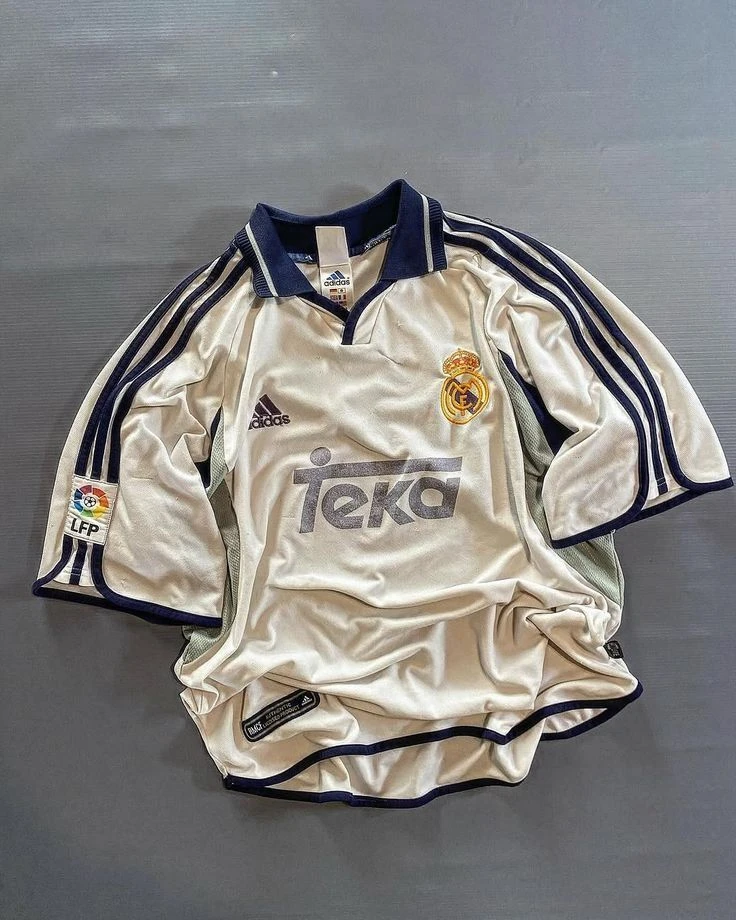
On almost every retro shirt the crest is embroidered, stitched straight into the fabric with raised thread. It's the detail collectors love most, because it looks and feels premium and lasts for decades. On modern player shirts the crest is usually heat-pressed: a flat, lightweight badge bonded to the fabric so it adds no weight or stiffness. Fan versions of modern kits still use embroidery, which is one of the main ways to tell the two apart (we break it down in player version vs fan version).
Collars
The 90s and early 2000s were the golden age of the collar: polo collars, button plackets, even lace-ups. Modern kits mostly use V-necks and crew necks because they're lighter and more comfortable to play in, although a few clubs have started bringing collars back on special editions because fans keep asking for them.
Sponsors
Old sponsors were often applied in a soft, raised flock (a velvety finish) or a thick screen print, and they were huge: think Sharp on Manchester United, Teka on Real Madrid or JVC on Arsenal. Modern sponsors are heat-transferred in thin, flexible film, and they move with the fabric instead of sitting on top of it.
Names, numbers and patches
For most of football history, shirts just carried the numbers 1 to 11. In England, squad numbers with names on the back arrived with the 1993/94 Premier League season, and the rest of Europe followed over the next few years. That changed the replica market forever: suddenly you could wear CANTONA #7 instead of just "a United shirt".
Sleeve patches tell the era too. The LFP badge on La Liga shirts, the old gold Premier League lion patches, Champions League starballs: they're all part of what makes a retro shirt look match-correct.
One kit every season
Through the 80s and 90s most clubs kept a home kit for two seasons. Now the biggest clubs release a new home, away and third kit every single year, plus special editions, training tops and anniversary shirts. That's great if you like variety, but it also means older designs disappear quickly. It's a big part of why retro shirts have become so collectable.
Retro vs modern at a glance
| Retro (90s to 2000s) | Modern (2020s) | |
|---|---|---|
| Fit | Loose and boxy, longer sleeves | Slim and athletic, especially player versions |
| Fabric | Heavier polyester, woven shadow patterns | Lightweight recycled polyester, vented zones |
| Crest | Embroidered | Embroidered (fan) or heat-pressed (player) |
| Collar | Polo, button or lace-up collars common | Mostly V-neck or crew neck |
| Sponsor | Large flock or thick print | Thin, flexible heat transfer |
| Kit cycle | Often two seasons per kit | New kits every season |
| Best for | Everyday wear, streetwear, nostalgia | Match days, training, the current squad |
Why retro is back
Walk through any city on a weekend and you'll see old Milan, Inter and Arsenal shirts worn with jeans and sneakers. A few reasons:
- Nostalgia. People want the shirt of the player they grew up watching: Henry, Ronaldinho, Kaká, Beckham, Totti.
- Designs you can't buy anymore. Bold 90s patterns, collars and classic sponsors don't come back on new kits.
- The fit works as streetwear. A relaxed retro shirt looks right untucked, over a hoodie or with cargos in a way a skin-tight player shirt doesn't.
- They last. Embroidered crests and heavier fabric mean a well-kept retro shirt still looks good years later.
- Retro shirts are looser and heavier, with embroidered crests, collars and big flocked sponsors.
- Modern shirts are slimmer and lighter, with vented fabric and (on player versions) heat-pressed badges.
- Neither is better: retro wins for everyday style, modern wins for playing and supporting the current squad.
Want one of each? Browse our retro jerseys (all $55) or the latest club and national kits (from $50). Every shirt can be printed with any name and number.
FAQ
Why are retro football jerseys so popular?
Nostalgia for the players and seasons people grew up with, designs that clubs no longer make, and a looser fit that works as everyday streetwear.
Do retro jerseys fit differently to modern ones?
Yes. Shirts from the 1990s were cut big and boxy, and by the mid-2000s fits had narrowed. Modern kits are slimmer again, especially player versions. Check the size chart on each jersey.
When did football shirts get names on the back?
In England, squad numbers with players' names on the back arrived with the 1993/94 Premier League season. Before that, shirts usually just carried numbers 1 to 11.